How Acupuncture and Massage Therapy Support Postpartum Recovery
The first three months after birth are a developmental stage of their own — for the baby, and just as much for the mother. Here’s how acupuncture and massage support postpartum recovery through the fourth trimester: what each one does, what the research shows, and how to fit care into a season when time is the scarcest resource you have.
The Fourth Trimester Is Real
Pregnancy gets nine months of appointments, monitoring, and attention. Postpartum recovery, in the standard American model, gets one checkup at six weeks — and then a quiet expectation to be “back to normal.”
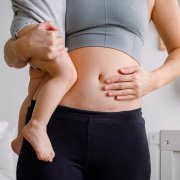
The body disagrees. In the months after birth, you are healing tissue (whether from a vaginal delivery or a cesarean), recalibrating hormones that shifted more in one week than most people’s do in a decade, producing milk if you’re breastfeeding, sleeping in fragments, and carrying, feeding, and lifting a rapidly growing human — usually in postures your shoulders and low back have strong opinions about.
Traditional Chinese Medicine has never treated this period as an afterthought. In TCM, the month following birth — zuo yue zi, often translated as “sitting the month” — is considered one of the most important windows in a woman’s life: a time when deep rest, warmth, nourishment, and support determine how fully the body rebuilds. Cultures across Asia and Latin America share versions of this practice. The modern “fourth trimester” concept is, in many ways, Western medicine arriving at the same conclusion.
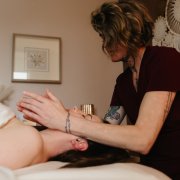
At Lokahi, postpartum care is one of the places our two locations work most closely together — acupuncture for the systemic, hormonal, and energetic recovery, and dedicated pre/postnatal massage at the Wellness Space for the body that’s been through labor and is now doing the physical work of new parenthood.
What Acupuncture Does for Postpartum Recovery
In TCM terms, birth depletes Qi and Blood — and most postpartum symptoms map onto that depletion: fatigue that sleep doesn’t fix, hair shedding, night sweats, low milk supply, low mood, feeling cold, slow physical recovery. Acupuncture treatment focuses on rebuilding those reserves while addressing whatever is most pressing week to week.
The research base, area by area:
- Pain. Randomized trials support acupuncture for postpartum pelvic pain, and trial evidence (including a large randomized study of acupoint therapy in 1,200 postpartum women) supports acupoint-based treatment for uterine contraction pain. For the neck, shoulder, and low back pain of feeding and carrying, the broader acupuncture-for-pain evidence applies fully
- Lactation. A meta-analysis of 19 randomized controlled trials with 2,400 participants found acupuncture significantly increased prolactin levels and milk volume in women with low supply. Not a replacement for lactation consulting — a useful adjunct alongside it
- Mood. Honesty matters most here. One randomized trial found acupuncture reduced postpartum depressive symptoms comparably to fluoxetine, without medication side effects — but systematic reviews call the overall evidence inconclusive, limited by study quality. What acupuncture reliably does is regulate the stress response and improve sleep quality, which supports mood from underneath. It is not a substitute for mental health treatment when depression is present
- Sleep and the nervous system. The mechanisms we’ve covered in our piece on acupuncture for anxiety apply doubly postpartum: parasympathetic activation, improved sleep quality, a nervous system pulled out of constant alert. When sleep comes in two-hour pieces, the quality of those pieces matters enormously
What Massage Does for Postpartum Recovery
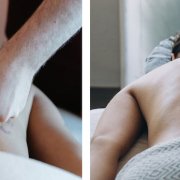
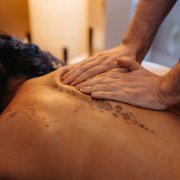
If acupuncture works on the systemic layer, massage works directly on the body that did the labor — and is now doing the lifting.
- The feeding posture pattern. Hours of nursing or bottle-feeding curl the shoulders forward, load the neck, and shorten the chest. Postpartum massage releases exactly this pattern — and opening the chest wall has the side benefit of supporting comfortable breastfeeding
- Stress chemistry. Massage research shows decreased cortisol and increased serotonin and dopamine — the same direction every new parent’s nervous system needs. Touch also promotes oxytocin, the bonding and relaxation hormone already central to this season
- Circulation and fluid. Gentle massage supports lymphatic drainage and circulation, helping resolve the fluid retention and swelling that linger after birth
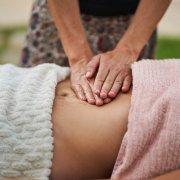
- Core and abdominal recovery. As healing progresses, targeted bodywork can support the abdominal wall’s recovery, including diastasis recti — always paced to where you actually are, and alongside appropriate rehab exercise when separation is significant
Timing: for vaginal deliveries without complications, gentle massage can begin as soon as you feel ready — for some women that’s within the first weeks. After a cesarean, full-body work waits for incision healing and your OB’s clearance, with abdominal work added later. Our pre/postnatal-specialized therapists adjust positioning for tender breasts, healing incisions, and bodies that haven’t been comfortable lying down in months.
Why Acupuncture and Massage Work Better Together
The fourth trimester presents on two layers at once. The depletion — hormonal recalibration, fatigue, low supply, fragile mood — is systemic. The aches — neck, shoulders, low back, healing core — are mechanical. Acupuncture addresses the first layer; massage addresses the second; neither fully reaches the other’s territory.
We’ve written about this combination for emotional stress, and postpartum is where it’s most vivid. A practical rhythm many of our postpartum patients use: alternating weeks — acupuncture one week, massage the next — which keeps care weekly while keeping the schedule humane. Both locations are in San Jose minutes apart, and our team coordinates care between them.
A note for planners: this works even better when it starts before birth. Patients who come in during pregnancy — for fertility or pregnancy support — transition into postpartum care with a team that already knows their history.
When to Seek Medical Care First
Acupuncture and massage support postpartum recovery — they don’t replace medical care. Contact your OB or midwife promptly for heavy bleeding, fever, severe headache, incision concerns, chest pain, or calf swelling. And if your mood is consistently low, anxious, or simply not you — especially past the two-week mark — please tell your provider. Postpartum depression and anxiety are common, treatable, and nothing to push through alone. We’re glad to be part of a support team that includes your physician and a therapist; that combination works.
The Bottom Line
Postpartum recovery deserves the same intention as pregnancy. The cultures that treat the fourth trimester as sacred have it right: rest, warmth, nourishment, and skilled hands rebuild a body faster than willpower does.
Acupuncture restores the system; massage restores the structure; together they cover what this season actually asks of you.
If you’re expecting, newly postpartum, or months in and still not feeling like yourself — we’d love to support you.
Book a consultation at Lokahi →
Our main acupuncture clinic and Lokahi Wellness Space are both located in San Jose. Our Wellness Space therapists include dedicated pre/postnatal massage specialists, and our acupuncturists coordinate postpartum care across both locations.
Lokahi Acupuncture
Free Consultation
408.279.9001
Follow us on Instagram
Make an Appointment
This article is for informational purposes only and is not medical advice. Always follow your OB or midwife’s guidance on postpartum activity and recovery timelines, and seek immediate care for postpartum warning signs such as heavy bleeding, fever, or severe headache.