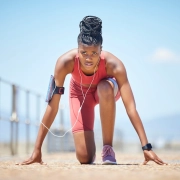
Why Runners Are Turning to Acupuncture for Faster Muscle Recovery
Muscle recovery is the limiting factor in almost every training plan. Here’s what acupuncture actually does for runners for faster recovery — the seven benefits worth knowing about, the injuries acupuncture treat best, and how to fit it into your training cycle without overcomplicating things.
Acupuncture for Runners
If you run consistently, you already know that recovery is where the gains are made. The miles build fitness. The recovery lets your body integrate it. When recovery lags, small things start to compound — tightness that doesn’t quite release between runs, niggles that become injuries, sleep that doesn’t leave you feeling rested before the next session.
Acupuncture has moved from the fringes of running culture toward the mainstream over the past decade, and not because of marketing. Runners who use it tend to stick with it because they notice the difference in their muscle recovery, their injury patterns, and how their body feels mile after mile. The research is uneven in some areas and quite strong in others, and it’s worth being honest about both.
At Lokahi, runners are one of our more consistent patient groups, and we approach their care with the same integrated lens we use for any athlete — acupuncture for the systemic and neuromuscular layer, and when appropriate, sports massage and deep tissue work for the mechanical layer. Here’s what acupuncture actually contributes.
7 benefits of acupuncture for runners
1. Faster recovery between sessions
Acupuncture increases local and systemic circulation, supports lymphatic clearance, and reduces the inflammatory load that accumulates with hard training. The research on acupuncture and delayed-onset muscle soreness (DOMS) is genuinely mixed — some studies show meaningful reductions in post-exercise pain and stiffness, others show smaller or inconsistent effects. What tends to hold across runners in clinical practice is that the accumulated fatigue of consecutive hard sessions clears faster with regular treatment, even if the effect on any single bout of DOMS varies.
For most runners, this shows up as less cumulative stiffness over a training block, not a dramatic change after one long run.
2. Pain modulation and endogenous opioid release
One of the most robustly documented effects of acupuncture is its role in pain regulation. Needling activates the release of endorphins and other endogenous opioids, modulates central pain processing, and can significantly reduce perceived pain from musculoskeletal conditions. For runners dealing with the low-grade aches that are part of any training block — the calf that talks to you, the hip that grumbles after long runs — this translates to real, drug-free pain relief.
3. Targeted treatment of common running injuries
This is where the evidence base is strongest. Several running-specific injuries respond well to acupuncture:
- Plantar fasciitis — systematic reviews consistently show acupuncture significantly reduces pain and improves function, with effect sizes comparable to standard-of-care treatments like stretching and night splints
- Patellofemoral pain syndrome (runner’s knee) — randomized controlled trials have documented meaningful pain reduction with acupuncture, particularly when combined with standard physical therapy
- Achilles tendinopathy and IT band syndrome — both respond to acupuncture combined with appropriate mechanical treatment (foam rolling, targeted strengthening, running-form adjustments)
- Shin splints — studies comparing acupuncture with sports medicine alone have found faster pain reduction when acupuncture is included
We’ll go deeper on these in the injury section below.
4. Improved circulation to tendons and ligaments
Connective tissue — tendons, ligaments, fascia — has significantly less vascular supply than muscle tissue, which is part of why injuries in these structures heal slowly and tend to recur. Acupuncture improves microcirculation to these areas specifically, helping deliver the oxygen and nutrients needed for tissue repair. For runners with chronic or recurring connective tissue injuries, this is often the layer where acupuncture adds something that stretching and foam rolling cannot.
5. Nervous system regulation and sleep
Training stress is still stress. Runners in high-mileage blocks, in taper, or preparing for races often experience elevated sympathetic tone that interferes with the parasympathetic recovery the body needs overnight. Acupuncture reliably activates parasympathetic pathways, increases heart rate variability, and improves sleep quality — the same mechanisms we’ve covered in our piece on acupuncture for anxiety and the nervous system.
Better sleep means better recovery. This is often the most underappreciated benefit of acupuncture for runners — not the direct effect on muscle tissue, but the systemic shift that lets the body actually do its recovery work overnight.
6. Addressing imbalances that cause reinjury
Most running injuries aren’t acute — they develop from accumulated biomechanical patterns. Chronically tight hip flexors load the knee differently. Overactive calves change stride mechanics. Compensations from an old injury persist long after the original issue has resolved. Acupuncture, particularly when combined with bodywork and form assessment, helps interrupt these patterns before they produce the next injury.
This is where acupuncture’s value shifts from symptom relief to genuine injury prevention. Runners who maintain regular treatment through a training cycle tend to get injured less — not because acupuncture is magic, but because the underlying patterns get addressed before they break down.
7. Support for training-related stress and overtraining
In TCM, the runner’s common pattern is Liver blood deficiency combined with Kidney qi strain — a clinical framework that maps neatly onto what modern sports medicine describes as overtraining syndrome. Chronic fatigue, poor recovery, disrupted sleep, irritability, and declining performance despite maintained training volume are all signs that the system is being depleted faster than it’s being restored.
Acupuncture supports the systemic recovery that prevents overtraining from becoming a longer-term problem. For runners in heavy training blocks or navigating competing life stressors alongside their running, this broader support layer is often as valuable as the local muscular work.
Common running injuries and what the evidence says
Beyond general recovery, acupuncture has specific, research-supported applications for the most common running injuries. Here’s what the evidence looks like for each.
Plantar fasciitis
One of the better-studied applications of acupuncture in sports medicine. Systematic reviews have consistently found that acupuncture significantly reduces pain on validated measures (Visual Analog Scale, Plantar Fasciitis Pain/Disability Scale) compared to standard care. A recent 2024 evidence synthesis concluded that both electroacupuncture and dry needling produce significant improvements in plantar heel pain, with benefits sustained beyond three months.
Mechanism: deactivation of myofascial trigger points in the foot and calf, local increase in blood flow to the fascia, and central pain modulation. For runners with persistent heel pain that stretching and orthotics haven’t resolved, acupuncture is worth trying before more invasive interventions.
Patellofemoral pain syndrome (runner’s knee)
A randomized controlled trial of 75 patients with PFPS found that acupuncture twice weekly for four weeks significantly reduced pain compared to no treatment. Broader evidence for trigger point dry needling shows short-to-medium term pain relief. The condition responds best when acupuncture is combined with appropriate strengthening work for the hip abductors and quadriceps.
IT band syndrome
ITBS is one of the most common knee injuries in runners, with incidence estimated at 5-14%. The primary drivers are biomechanical — hip abductor weakness, altered kinematics, and running pattern. Acupuncture addresses the symptomatic layer effectively (reducing pain, releasing tension in the band and surrounding structures) and works best when paired with the biomechanical correction that addresses the root cause.
Achilles tendinopathy
A tendinopathy requires patience regardless of treatment modality. Acupuncture’s contribution is meaningful: improved circulation to the tendon (which has poor baseline vascular supply), reduced pain that allows more consistent loading during rehab, and release of the calf trigger points that are usually contributing to the load on the Achilles.
Shin splints (medial tibial stress syndrome)
Clinical evidence supports acupuncture for shin splints, with one comparative study finding significantly greater pain reduction over a three-week treatment period compared to sports medicine alone. As with most running injuries, acupuncture works best alongside the mechanical work — reducing mileage temporarily, addressing footwear or surface issues, and correcting any underlying biomechanical contributors.
How to integrate acupuncture into your training cycle
This is the question most runners actually care about: when should I book, how often, and how does it fit with the rest of what I’m doing?
Base building
During base training, acupuncture every two to four weeks is usually plenty. The goal here is maintenance — supporting muscle recovery between moderate sessions, addressing any small imbalances before they become symptomatic, and keeping the nervous system well-regulated during a sustainable training load.
Build and intensity phases
As training intensity and volume increase, the recovery demand rises with it. Weekly or biweekly sessions work well through this phase. Many runners schedule their session 24-48 hours after their hardest workout of the week, which is when the nervous system is most receptive and the recovery benefit is most useful.
Peak and taper
In the two to three weeks before a race, the training load drops but the total stress often stays high — the anxiety of taper, the anticipation, the accumulated fatigue that’s finally surfacing. A session or two during this period supports sleep, nervous system regulation, and the sense of readiness that makes taper feel productive rather than anxious.
Race week
A session three to five days before race day can help with sleep quality, anxiety regulation, and any lingering stiffness that needs to clear. Avoid aggressive new work in the 48 hours before racing. Your acupuncturist should be calibrating treatment accordingly — this isn’t the week to work on chronic issues or push into areas that will be sore afterward.
Recovery week and post-race
After a hard race or long training effort, acupuncture within the first week helps clear accumulated fatigue, reduce inflammation, and re-regulate the sleep and nervous system patterns that tend to be disrupted. This is often when runners notice the most subjective benefit — the sense of getting their body back online faster than they expected.
Combining with massage
Acupuncture and sports massage are genuinely complementary for runners. Acupuncture addresses the neuromuscular and systemic layers; massage addresses the mechanical tissue layer directly. Most runners in our practice end up with some combination of both, typically on alternating weeks during higher-intensity training. We’ve written more about this combination in our piece on acupuncture and massage working together.
When acupuncture fits, and when it’s not enough
Acupuncture is a strong adjunct to good training, good sleep, good nutrition, and appropriate strength work. It’s not a substitute for any of those things, and it’s not a fix for training errors.
A few patterns where runners see particularly strong results:
- Chronic niggles that haven’t responded to rest, stretching, or foam rolling
- Recurring injuries that keep coming back in the same spot
- High-mileage training blocks where recovery is the limiting factor
- Taper and race preparation for key events
- Return-to-running after injury, when circulation and nervous system regulation support the rebuild
A few situations where you’d want a different or additional intervention first:
- An acute injury that needs imaging and diagnosis — see a sports medicine physician or physical therapist first
- Pain that worsens with running despite reduced load — usually a sign that mechanical issues need direct assessment
- Significant overuse injury that’s flaring — requires reduced running and structured rehab, with acupuncture as one supportive component
If you’re training seriously, dealing with a nagging injury, or just tired of feeling like you can never quite catch up on your muscle recovery, we’d love to talk.
Book a consultation at Lokahi →
Our main acupuncture clinic and Lokahi Wellness Space are both located in San Jose. Runners often work across both — acupuncture for the neuromuscular and systemic work, sports massage for the mechanical tissue layer.
Lokahi Acupuncture
Free Consultation
408.279.9001
Follow us on Instagram
Make an Appointment
This article is for informational purposes only and is not medical advice. For any acute or significant running injury, consult a sports medicine physician, physical therapist, or orthopedic specialist for proper diagnosis and treatment planning.