Combined Acupuncture and Chia Seed Benefits for Digestive Health and Hormonal Balance
Chia seeds are one of the few wellness-trend foods that mostly earn their reputation — and they happen to fit beautifully into a Traditional Chinese Medicine view of summer eating. Here’s an honest look at chia seed benefits for digestion, energy, and hormonal balance, how TCM reads this small seed, and why pairing good daily nutrition with acupuncture works better than either alone.
Chia Seed Benefits: What the Research Supports
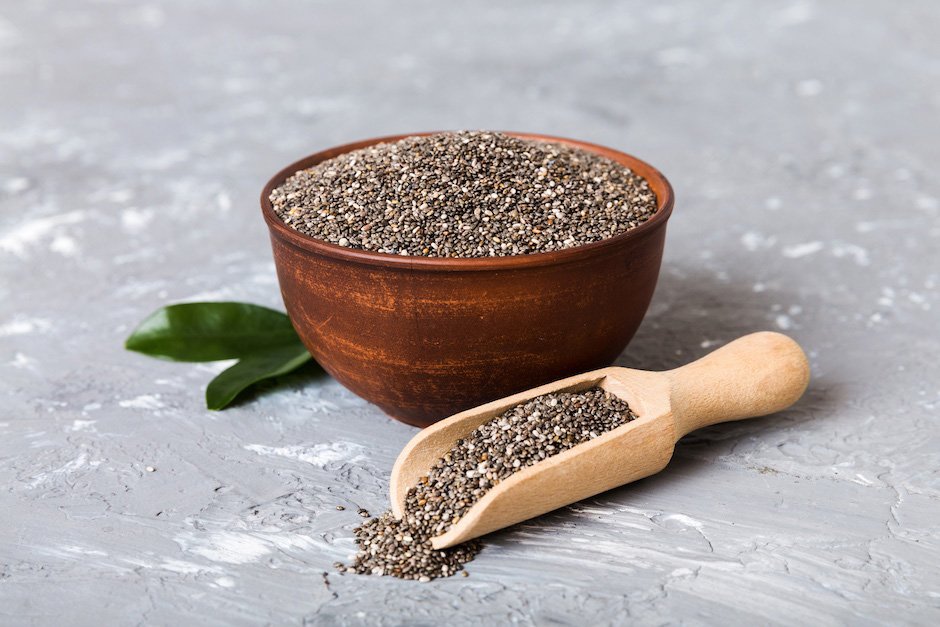
Strip away the superfood marketing and chia seeds still have a strong case. One ounce (about two tablespoons) delivers roughly 10 grams of fiber, 5 grams of plant omega-3s (ALA), complete protein, and meaningful calcium and magnesium — quietly relevant minerals if you read our piece on cycle nutrition.
What the clinical research actually shows:
- Digestion. This is chia’s clearest lane. The seeds absorb many times their weight in water, forming a gel that softens stool, adds bulk, and keeps things moving. For the constipation-prone — which includes a lot of stressed, busy, under-hydrated Silicon Valley professionals — chia is one of the gentlest daily fixes available
- Cardiovascular markers. A meta-analysis of 14 randomized controlled trials (729 participants) found chia supplementation significantly lowered systolic blood pressure and LDL cholesterol
- Steadier energy. The gel-forming fiber slows the absorption of a meal, blunting the spike-and-crash pattern that masquerades as an energy problem in many people. Honesty requires a caveat: recent meta-analysis found no significant effect on fasting glucose, so chia smooths the curve after meals rather than treating blood sugar disorders
- Hormonal balance, indirectly but credibly. There’s no trial showing chia “balances hormones” directly — anyone claiming that is ahead of the evidence. The real mechanisms are humbler and more reliable: estrogen is cleared through the gut, and adequate fiber supports that clearance; ALA omega-3s feed the anti-inflammatory pathways that hormonal health depends on; and magnesium supports the premenstrual symptoms with genuine trial evidence behind nutritional support
That last pattern is worth pausing on: most of what food does for hormonal balance is indirect — it maintains the systems (gut, liver, blood sugar, inflammation) that hormones move through. That’s not a weakness. It’s how foundations work.
How TCM Reads a Seed Like Chia
Chia is Central American, so it doesn’t appear in the classical Chinese texts — but TCM has a clear framework for it, because Chinese dietary therapy has always prized seeds as a category. Seeds are concentrated potential: in TCM terms, they nourish Yin and Essence (Jing), the deep reserves the body draws on for energy, fertility, and graceful aging.
More specifically, a TCM practitioner would recognize chia’s gel-forming, moistening quality immediately — it behaves like the classical intestine-moistening seeds (hemp seed, huo ma ren, is the famous example) used for exactly the kind of dry, sluggish digestion that worsens with stress, age, and summer dehydration. Soaked chia is cooling, fluid-generating, and lubricating — which is why it makes such a natural summer food, and why it pairs well with the cooling cucumber and mint salad from earlier this month.
A practical TCM note: always soak chia seeds before eating them. Dry chia pulls fluids from the digestive tract to form its gel — the opposite of what you want. Ten minutes in water, juice, or plant milk turns them from fluid-borrowers into fluid-givers. If your digestion runs cold and damp (easily bloated, loose stools), keep portions modest and pair chia with warming flavors — cinnamon, ginger — rather than cold smoothies.
Where Acupuncture Comes In
So why is an acupuncture clinic writing about a seed? Because the combination genuinely matters, and it runs in both directions.
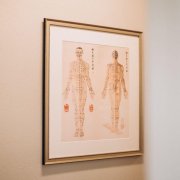
Nutrition sets the foundation; acupuncture treats the pattern. Chia can supply fiber, minerals, and omega-3s — but it can’t unknot a stressed nervous system, regulate a disrupted cycle, or move the stuck Qi that TCM sees underneath so many digestive and hormonal complaints. That’s treatment territory:
- For digestion, acupuncture works on the gut-brain axis — the reason your digestion changes under stress. Research supports acupuncture for functional digestive disorders like IBS, and clinically it pairs well with the mechanical support fiber provides. Fiber feeds the system; needles regulate it
- For energy, acupuncture addresses what food can’t reach: the depleted-but-wired state of chronic stress, poor sleep quality, and the patterns TCM calls Qi and blood deficiency. We’ve written about this nervous system layer in acupuncture for anxiety
- For hormonal balance, acupuncture regulates the stress response that sits upstream of so much hormonal disruption — the cortisol-to-cycle cascade we covered in how chronic stress affects women’s hormones — while customized herbal formulas from our dispensary address the specific pattern
And it runs the other way too: patients with well-fed, well-functioning digestion respond better to acupuncture. In TCM, the Spleen and Stomach are where Qi and Blood are made — treatment builds on whatever raw material your diet provides. This is why our practitioners ask about your breakfast, not just your symptoms.
A Simple Way to Start
The easiest entry point: basic chia pudding. Two tablespoons of chia, half a cup of milk or plant milk, a touch of honey, a shake of cinnamon. Stir, wait ten minutes (or refrigerate overnight), top with summer fruit. That’s a fiber, mineral, and omega-3 foundation in five minutes of effort — cooling enough for July, gentle enough for almost every constitution.
Then notice what changes over a few weeks — digestion, afternoon energy, premenstrual symptoms — and what doesn’t. What persists despite a good foundation is exactly the information an acupuncturist wants: it points to the pattern that needs treatment rather than nutrition.
The Bottom Line
Chia seed benefits are real but specific: reliable digestive support, modest cardiovascular improvements, steadier post-meal energy, and indirect-but-credible support for hormonal balance. TCM adds the how-to: soak them, keep them moderate, match them to your constitution. And when symptoms outlast a good foundation, that’s not failure — that’s a pattern asking for treatment.
If your digestion, energy, or cycle isn’t responding to the things you’re already doing well, we’d love to look at the pattern underneath.
Book a consultation at Lokahi →
Our main acupuncture clinic and Lokahi Wellness Space are both located in San Jose.
Lokahi Acupuncture
Free Consultation
408.279.9001
Follow us on Instagram
Make an Appointment
This article is for informational purposes only and is not medical advice. If you have a swallowing disorder, take blood thinners or blood pressure medication, or have a digestive condition, talk with your physician before adding chia seeds to your routine.